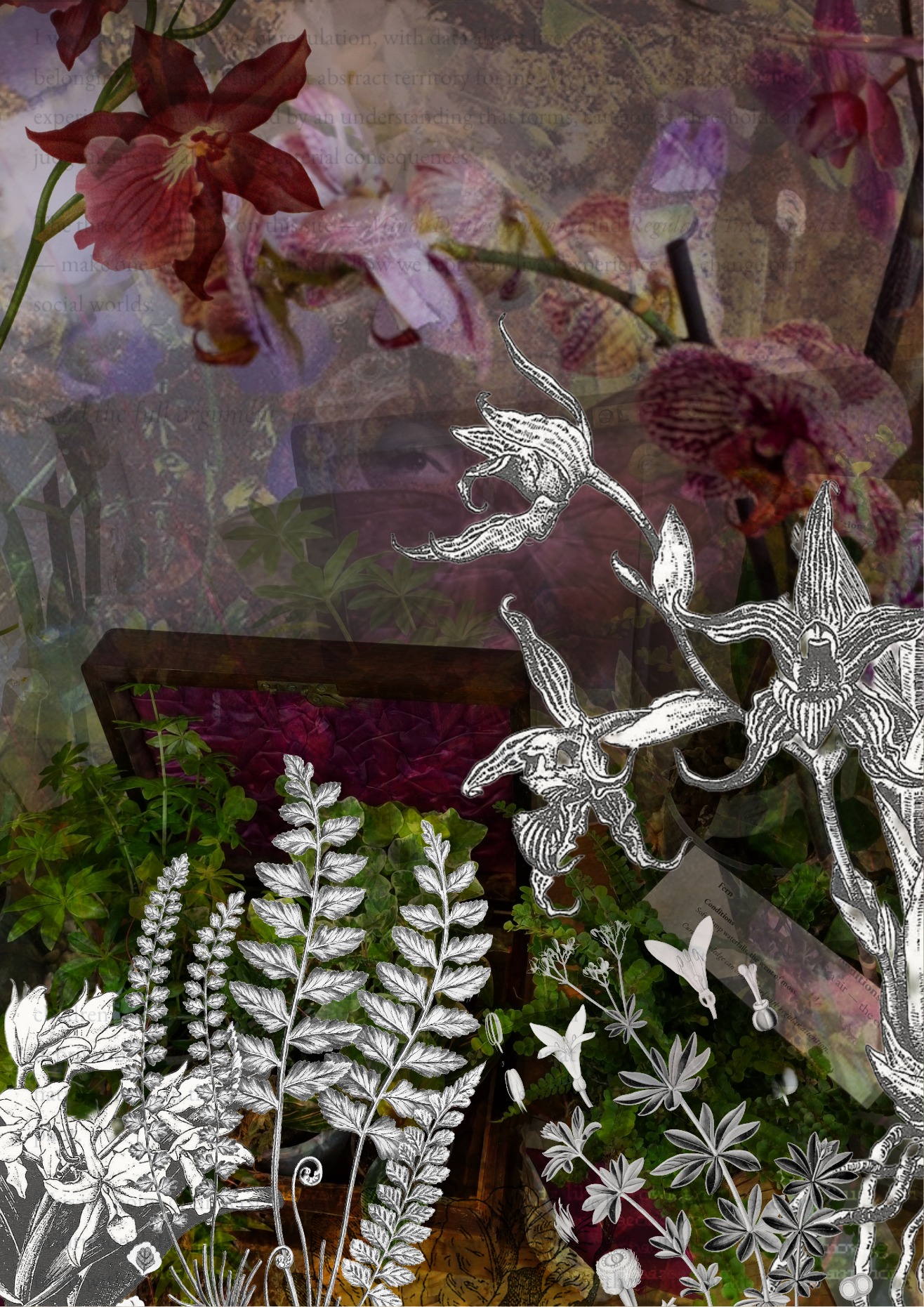
Is categorisation a synonym for containment?
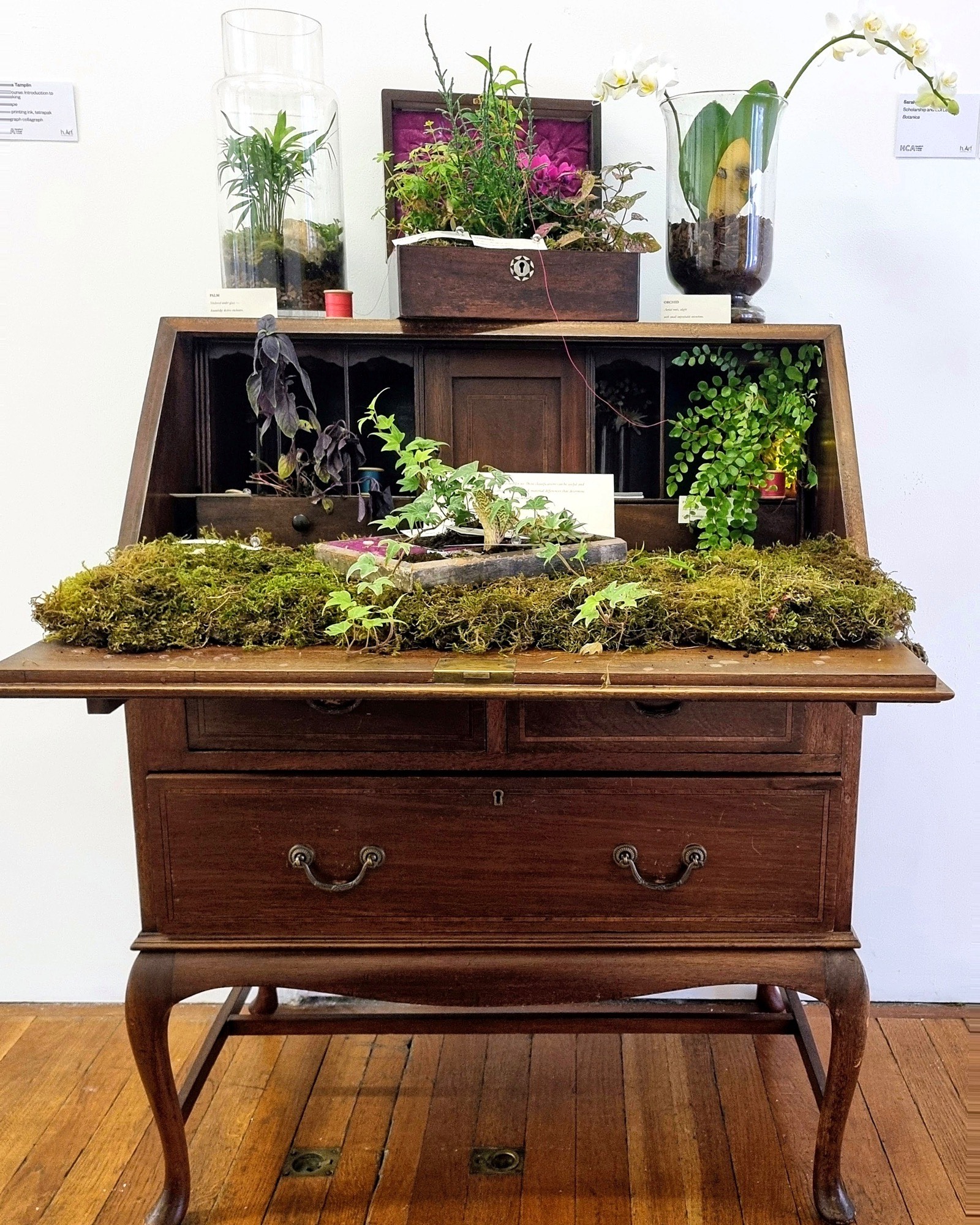
Botanica is a critical data materialisation developed through practice-as-research. Its living plants, inherited furniture, poetic labels and acts of care make classification materially present, allowing the installation itself to test what gets lost when complex, relational lives are organised into categories.
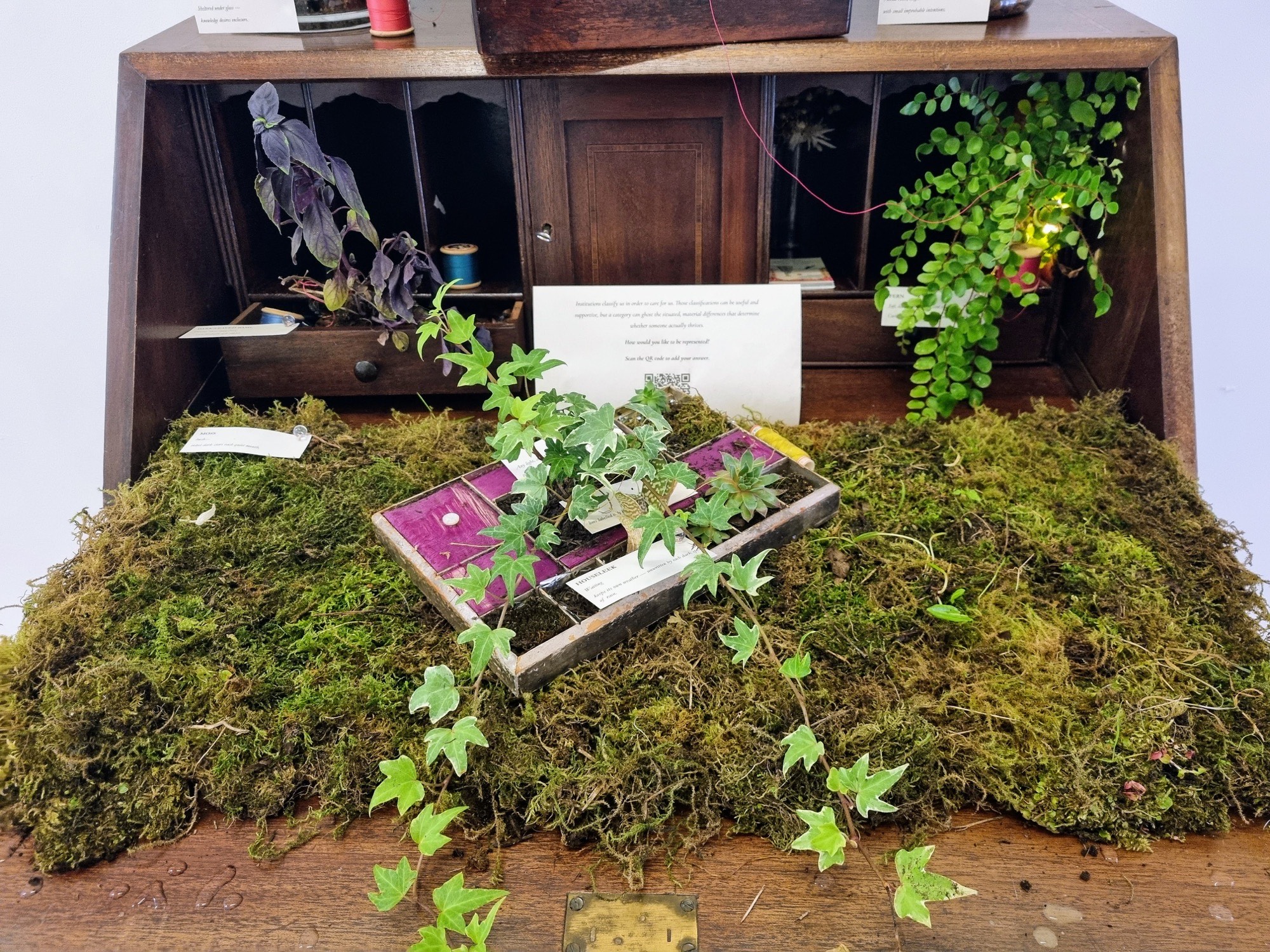
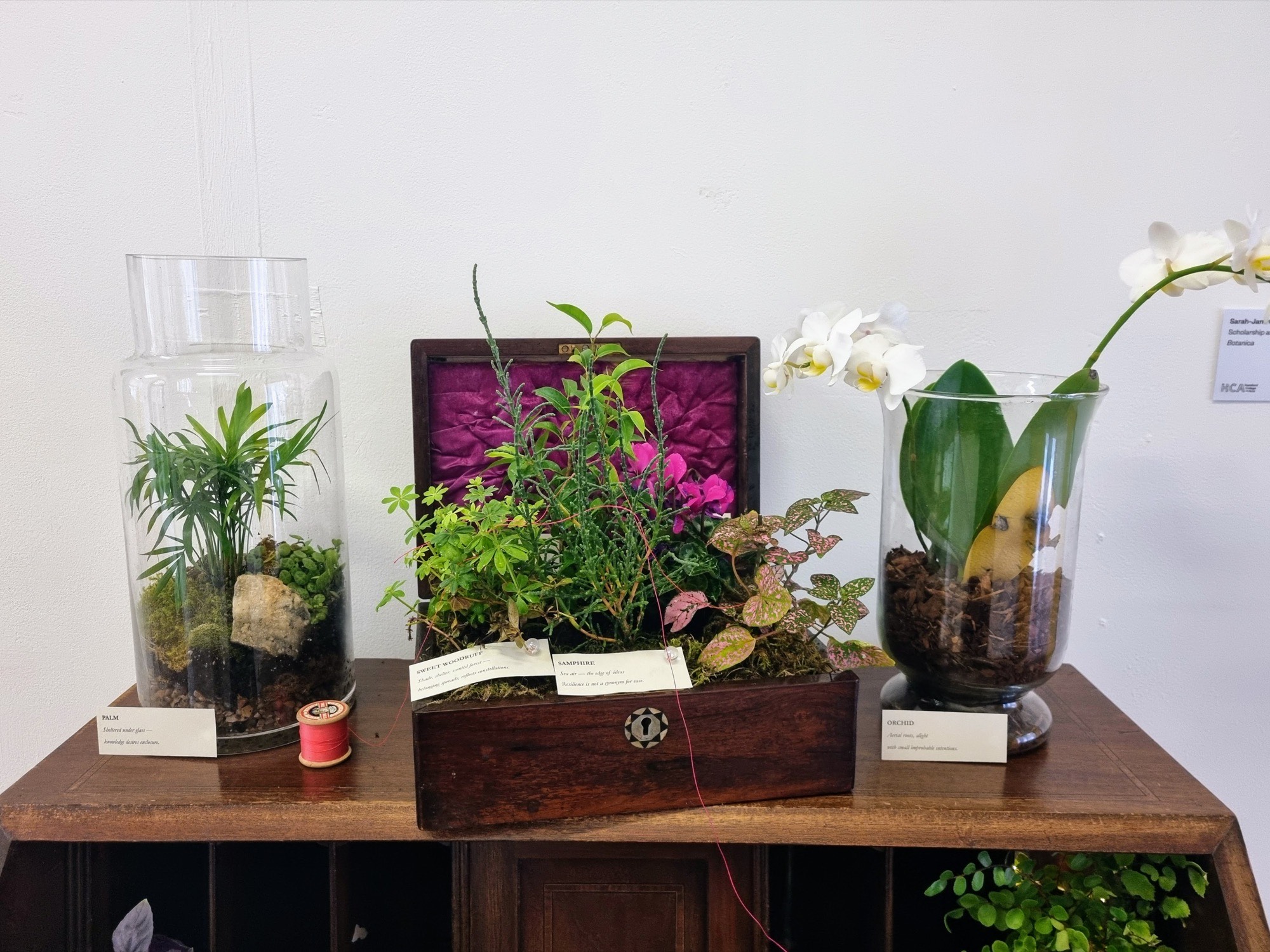
A Victorian sewing box was made to sort and separate threads, pins and buttons. A bureau was made to organise papers and provide a space in which to conduct business. Here, both hold living plants instead. Each plant is labelled with its name and a care label.
The labels are accurate, though accuracy, too, relies on particular structures of noticing. The prescribed forms of care will be given, as far as the material conditions allow. And yet the plants may diverge. One orchid may thrive; another may drop its flowers.
A box is a single atmosphere. A single organising principle. What lives within it is not.
How can material, participatory forms of data help organisations 'know' people more fully — and could it widen the evidence policy draws on, beyond what algorithms already count?
Installed as a living critical data materialisation, Botanica brings the organising structures of the sewing box and bureau into contact with plants whose needs and responses remain particular.
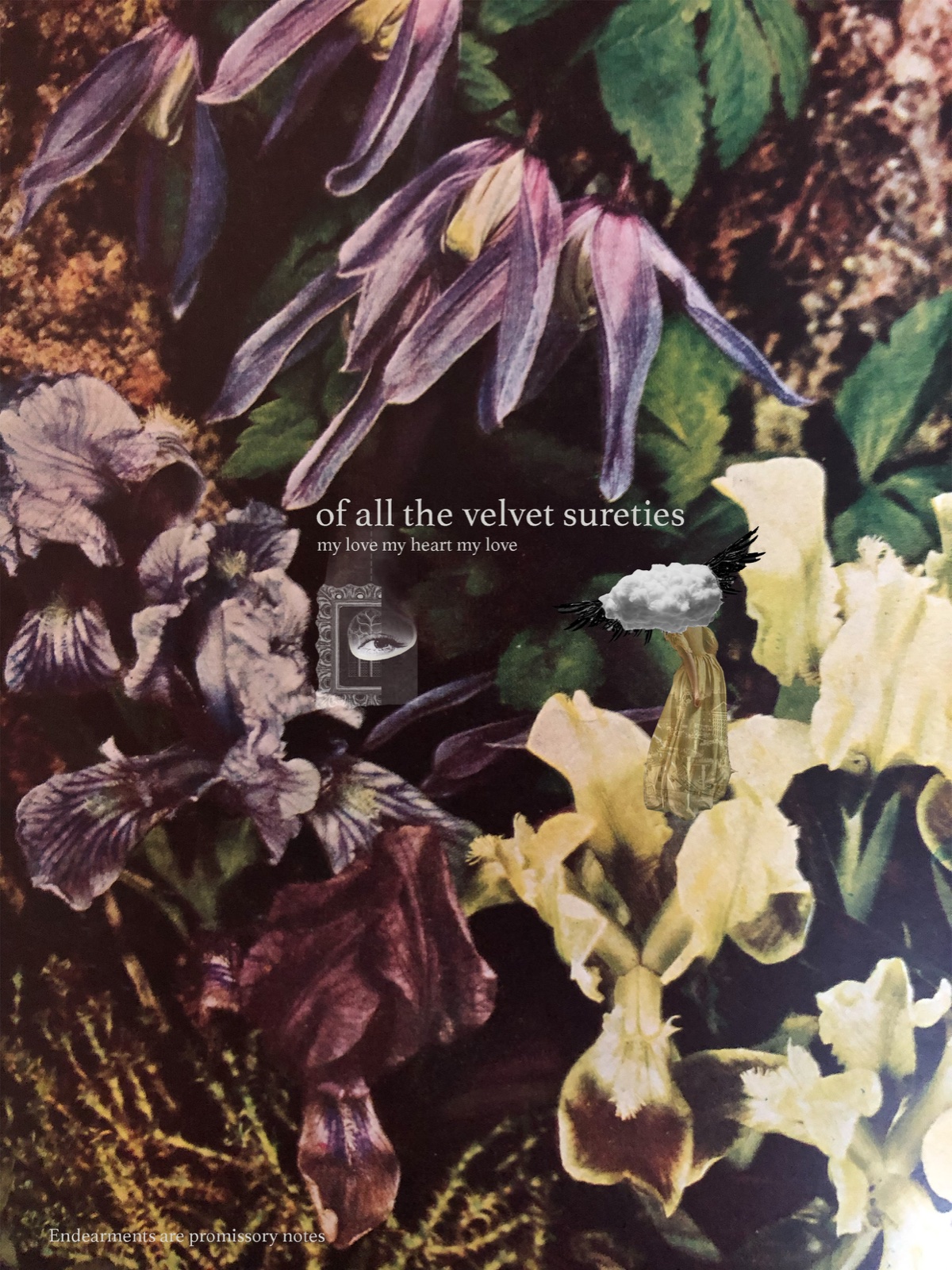
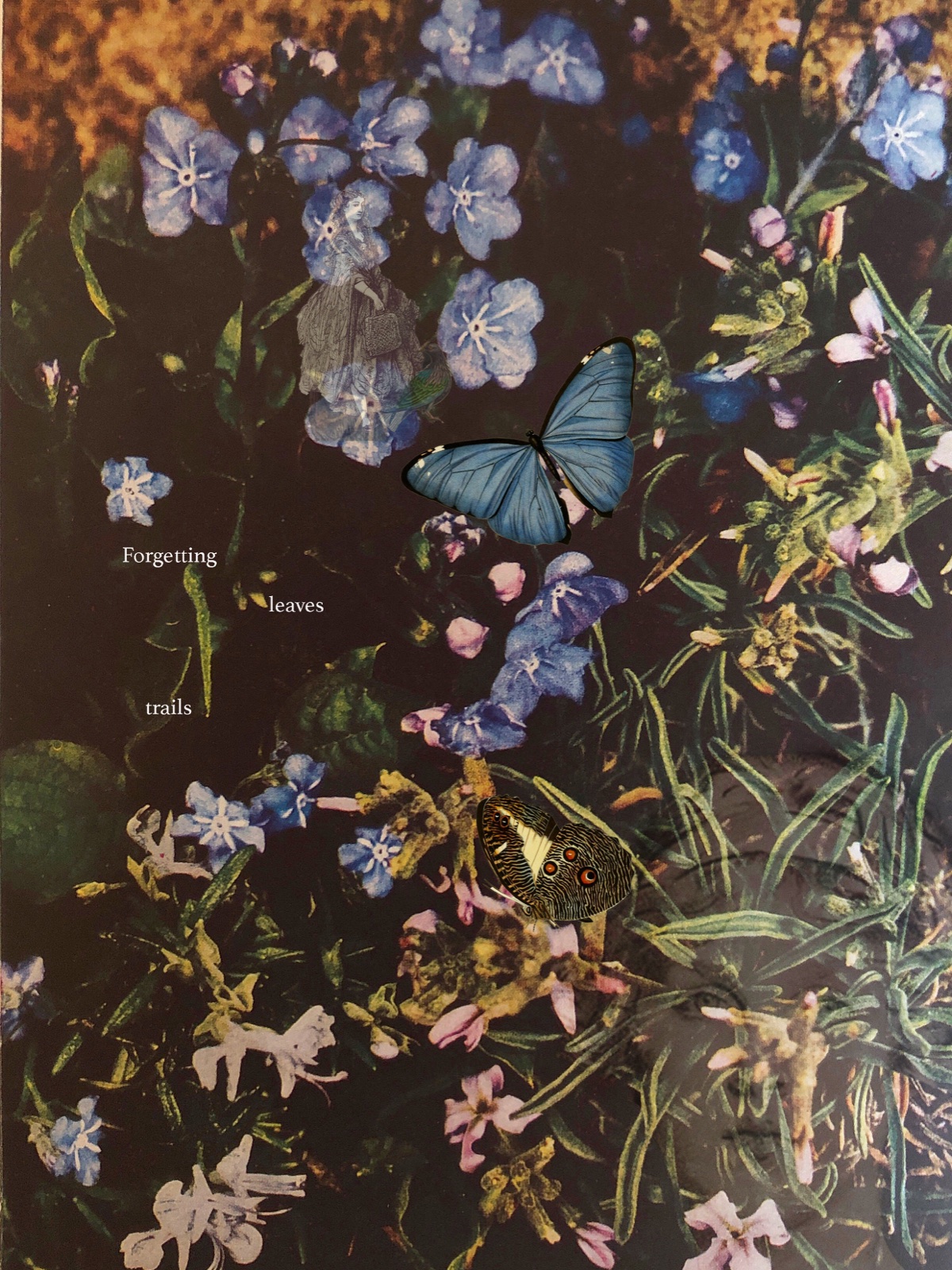
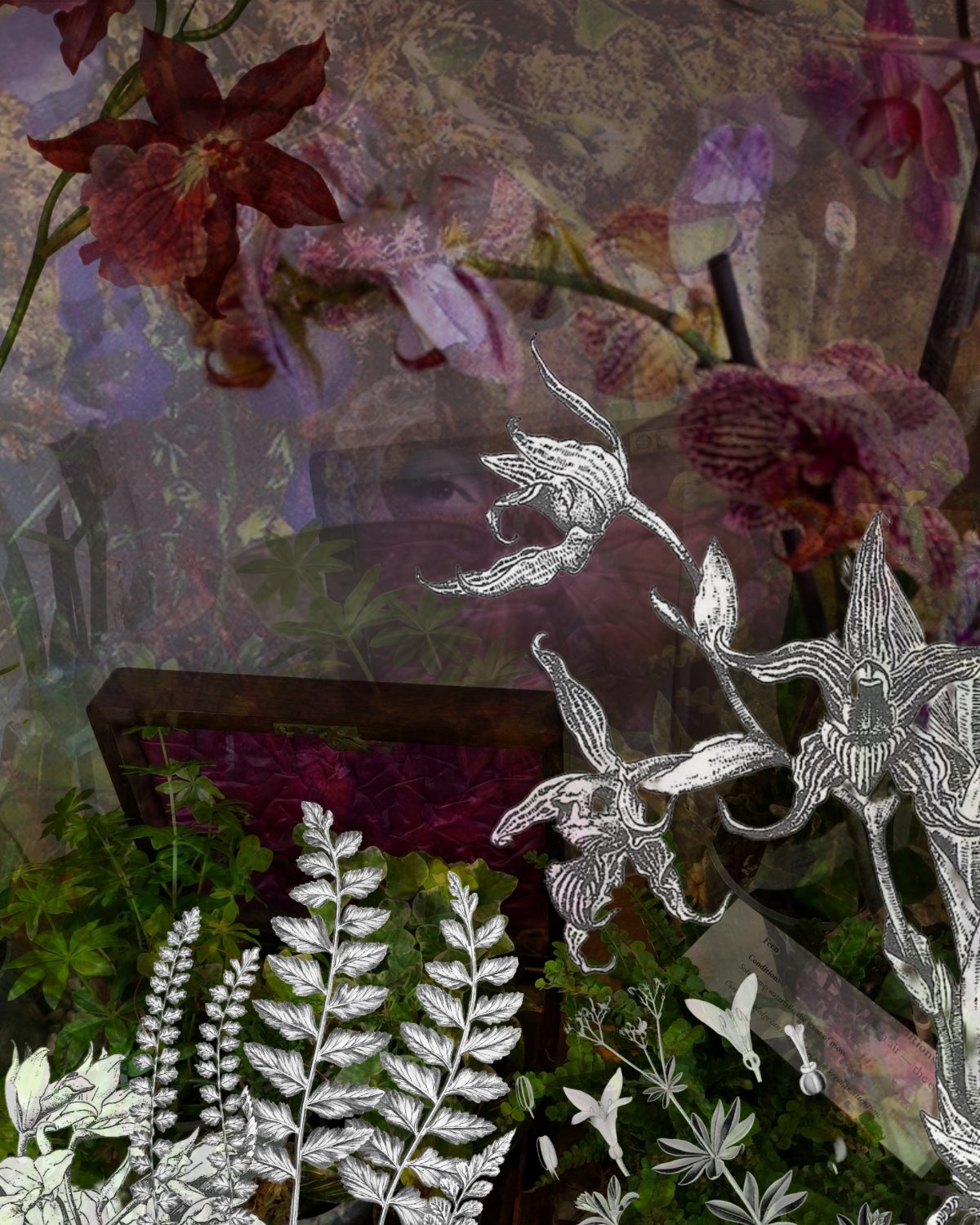
Earlier collages established Botanica's visual language: found taxonomies, poetic labels and living forms held in unstable, questioning - sometimes dissonant, sometimes invisible - relation.
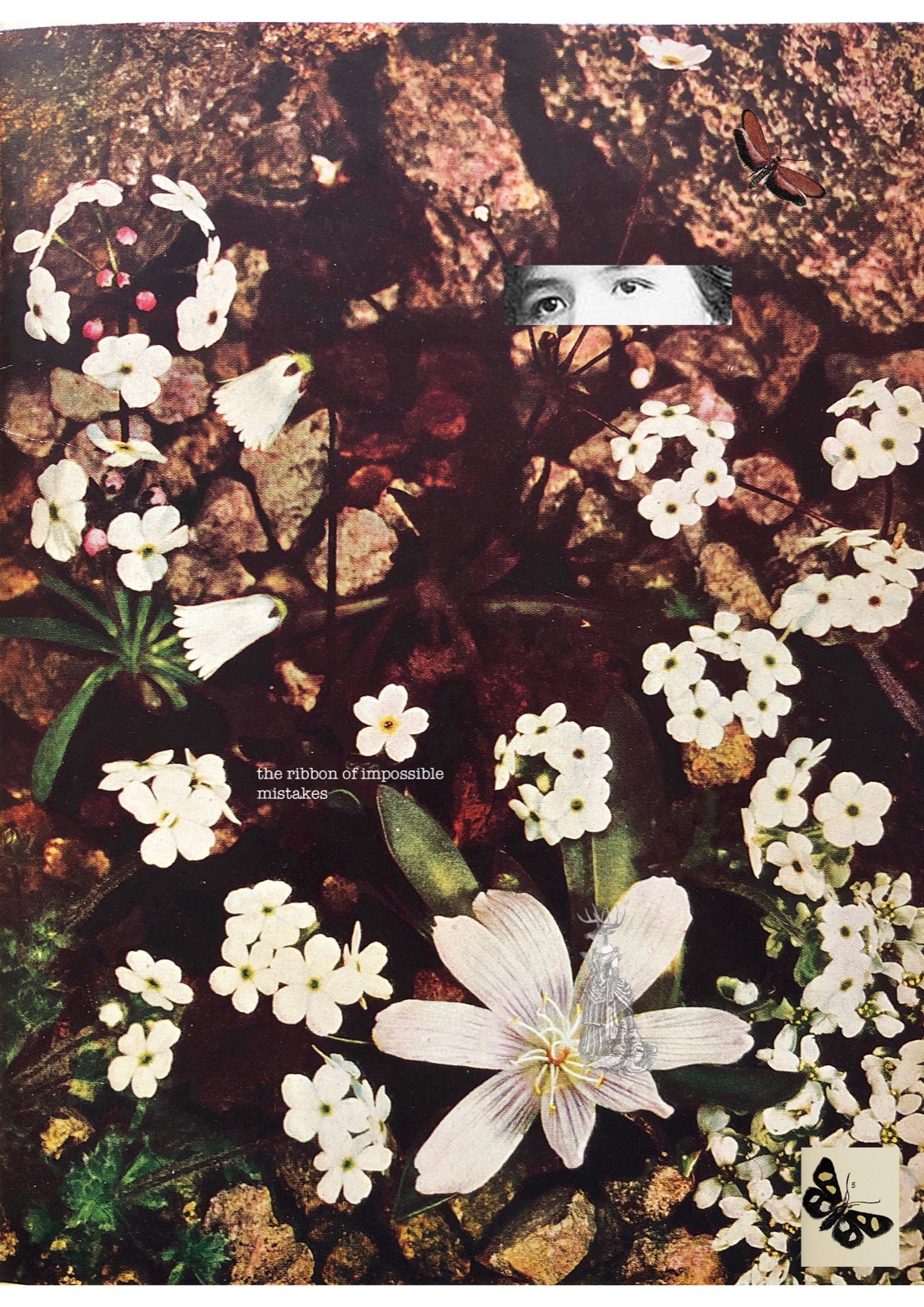
Botanica is developed through practice-as-research: making, observing and caring are not illustrations added after the research, but methods through which the inquiry proceeds. Plants with different requirements and characteristics nestle together rather than remaining in their preferred conditions or ecosystems. Poetic care labels both classify each plant according to the conditions it requires and suggest qualities that might apply to human lives, too.
The living installation enacts its metaphor by showing signs of tension over time. There are material and ecological responsibilities within the method: plants are moved out of the organising structures when their wellbeing requires conditions the installation cannot provide. This produces a finding through practice: bringing different living things together, placing them in categories and accurately labelling their needs does not mean they will thrive, despite the promise of careful order.
A heatwave risked the health of sweet woodruff — a forest plant, vulnerable precisely because it had been moved out of its relational ecosystem. Moss, too, proved difficult to keep alive outside the conditions it requires. Experiments with terrariums and a mossarium test a different possibility: here the structured environment and scientific constraints of the glass can support rather than hinder survival. And even when given equal care, following identical instructions, plants choose their own pathways: one orchid drops its flowers; another thrives. This is knowledge produced through the material practice itself. The installation continues to tell me what it knows about data, questioning what constitutes care.
The installation's problems — and what becomes more visible or invisible through them — are not separate from its metaphor. They are part of the method and the findings.
Sewing boxes, like many Victorian objects, divide, compartmentalise and label. They are both useful and beautiful. But a box is still a single container: one atmosphere, one structure, one bounded environment. The idea of sorting, of classification does real, useful work. But Botanica asks what happens at the point where it reaches its limit, or when it is applied to things which require different kinds of care.
Informed by Lefebvre, Massey and Soja, Botanica creates a materially produced representational space in which identity can remain relational, multiple and unfinished. As a critical data materialisation, a form of critical spatial practice and an instance of practice-as-research, it returns abstracted accounts of lived experience to matter, lived space and place, disrupting the idea that institutional data offers a complete account.
Rather than treating data as fixed, flat or extractive, Botanica asks what happens when data is visualised as ecological instead — situated, fragile, adaptive and dependent on particular environments. A data point then behaves less like an entry in a spreadsheet and more like the living thing it represents: it needs particular conditions to be understood accurately, and it can be harmed by the wrong environment even while carrying an accurate care label.
Institutions hold two instruments for knowing a life. The metric is legible but dry: it can count every fern in the box and never notice one drying out. The case study is alive but singular: one plant, beautifully described, asked to stand for a forest. Botanica sits in the space between — proposing that accounts of lived experience can be gathered with enough rigour to sit alongside statistical datasets, and enough layers to argue with them as equals.
A label states what is needed to thrive. A care environment takes notes.
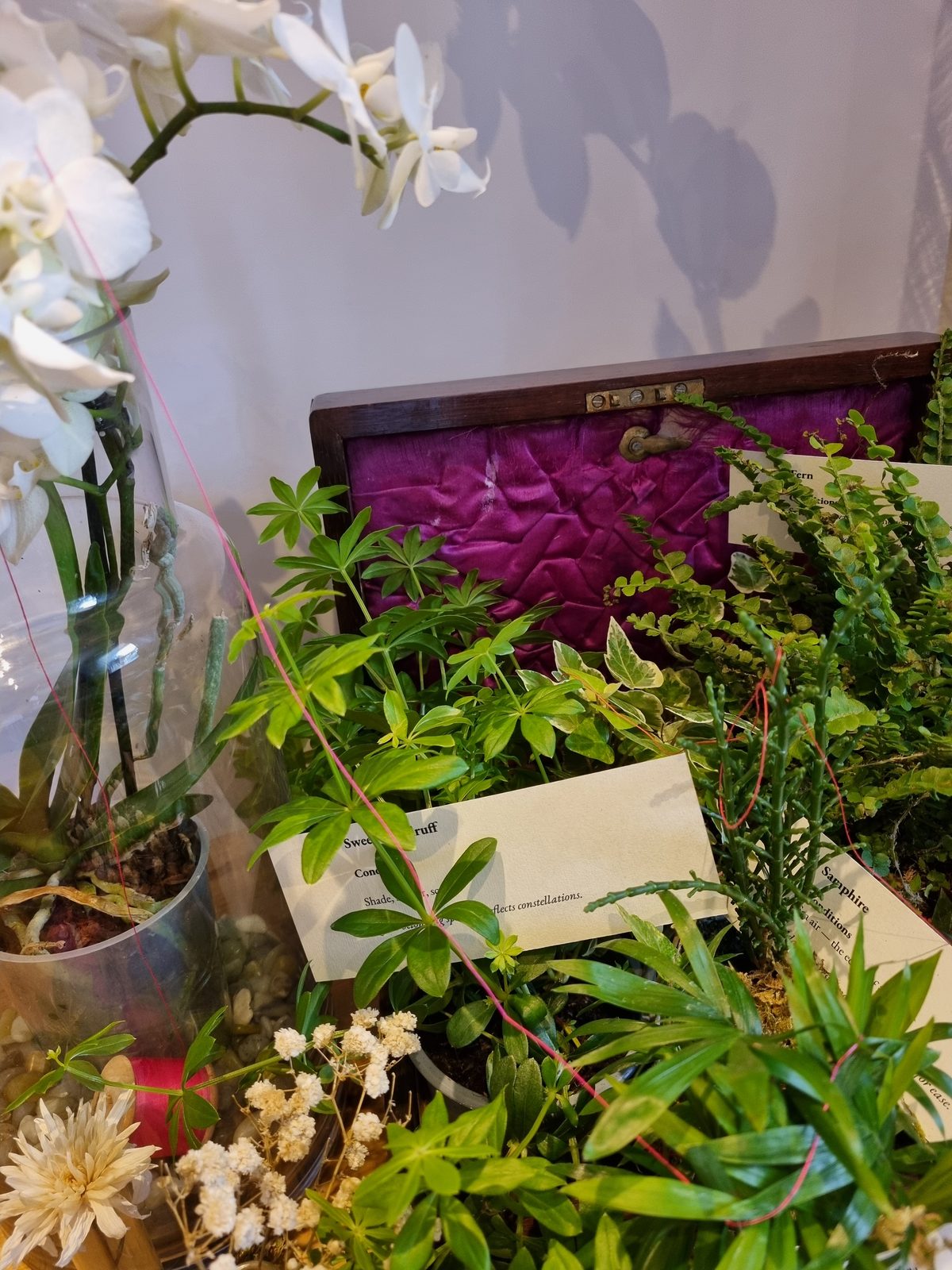
The poetics of labelling character as well as characteristics.
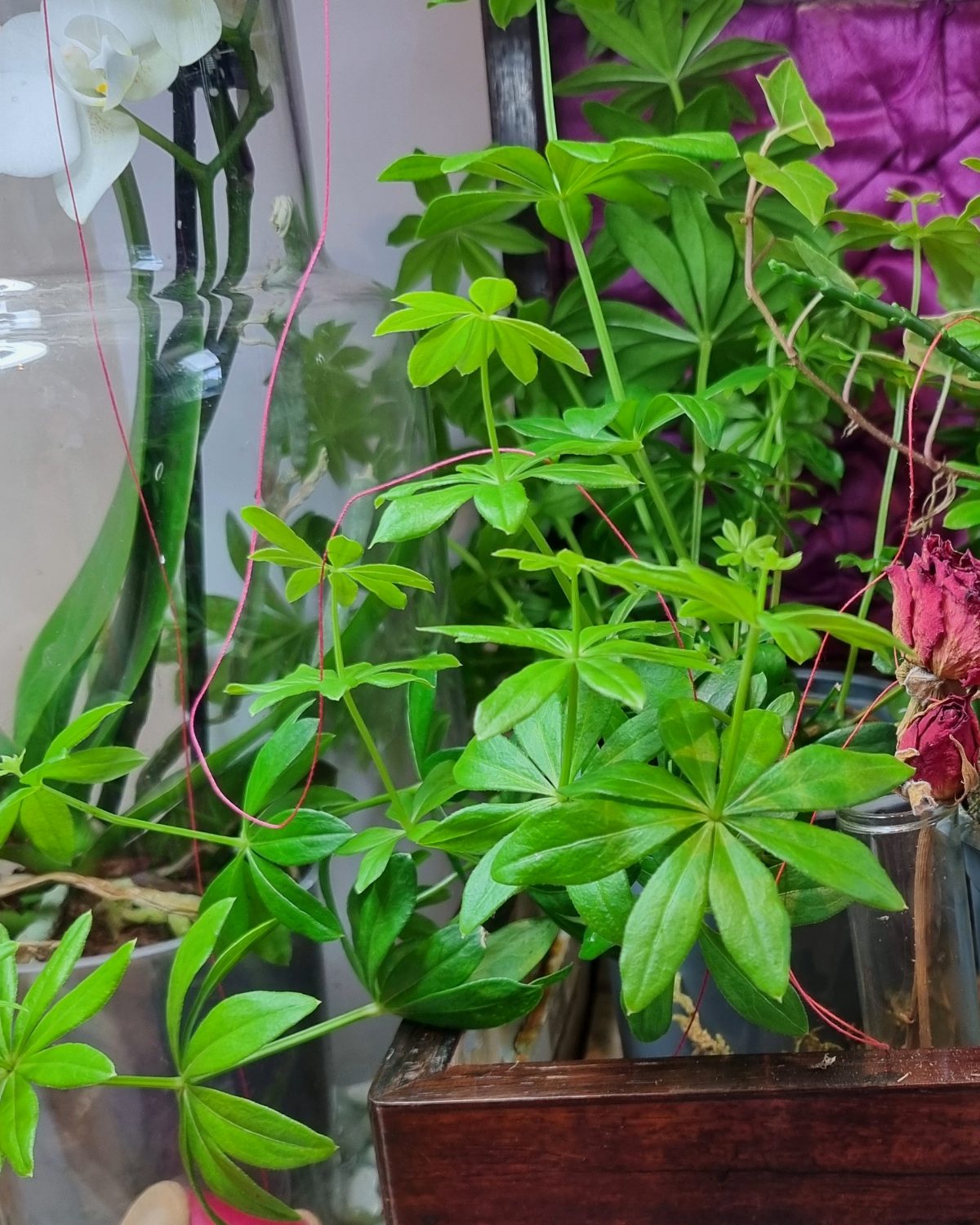
Shade, shelter, stars — the forest floor a quiet constellation.
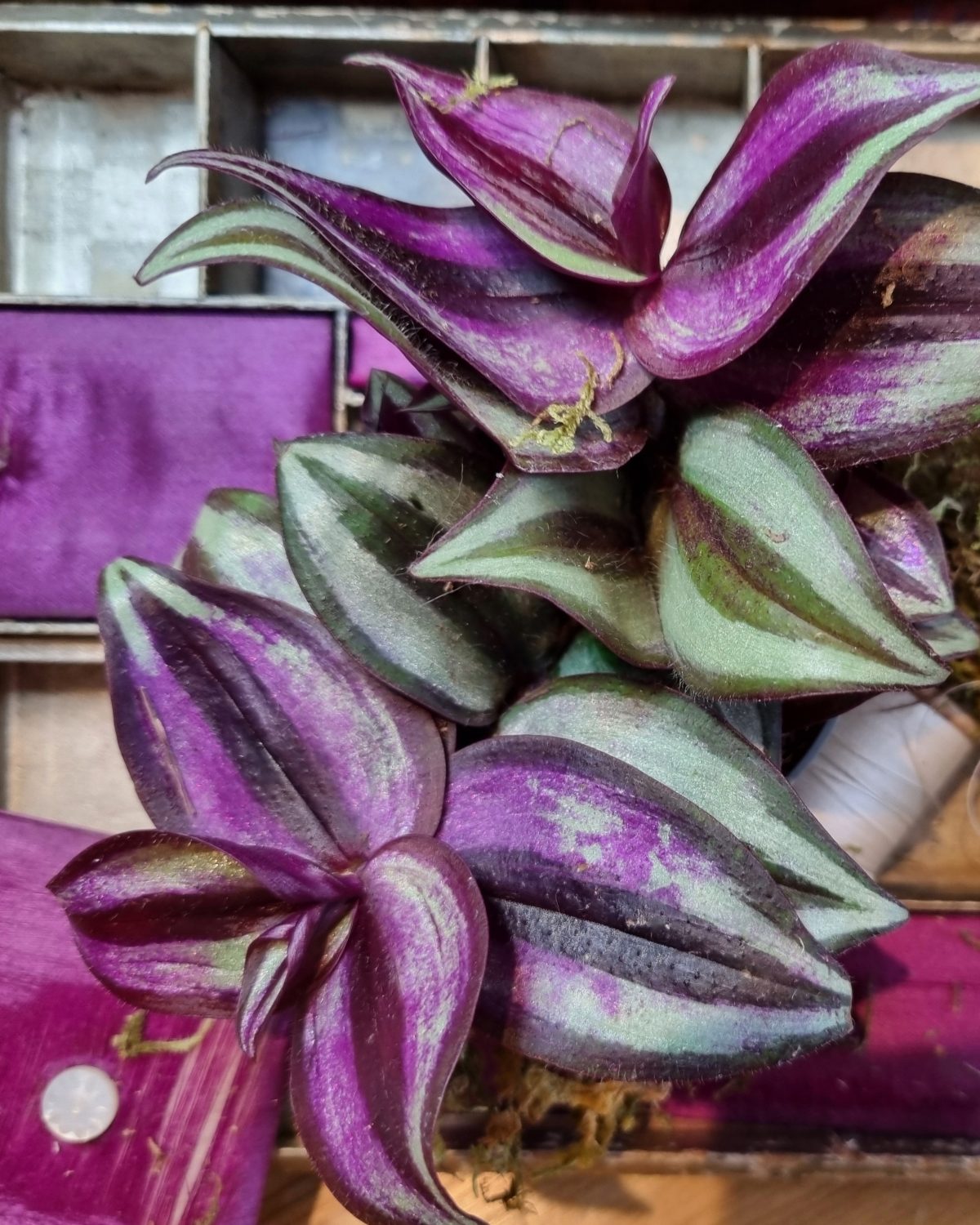
My brightness thrives in soft half-shaded light — holds vibrancy and contemplation.
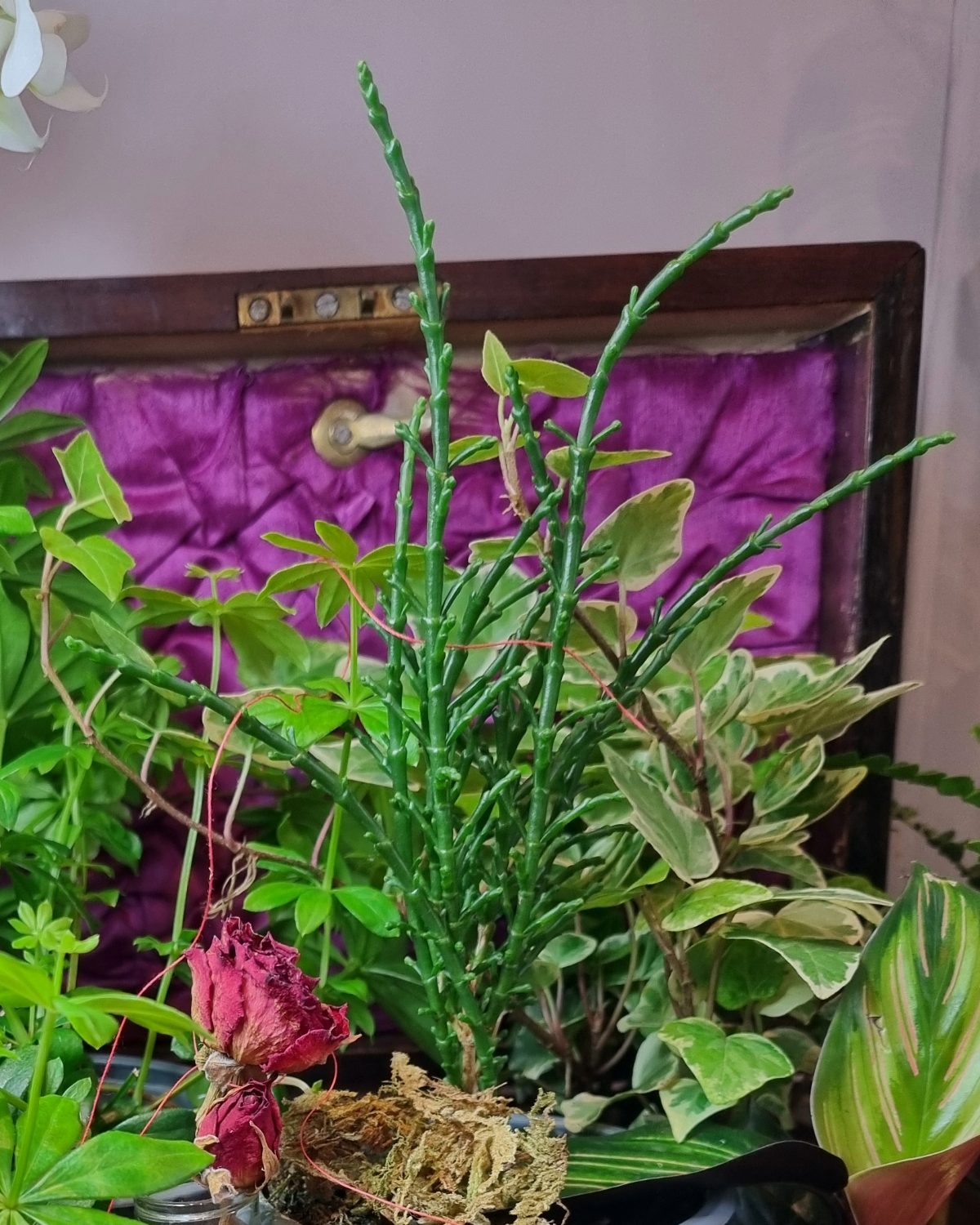
Sea air — the edge of ideas. Resilience is not a synonym for ease.
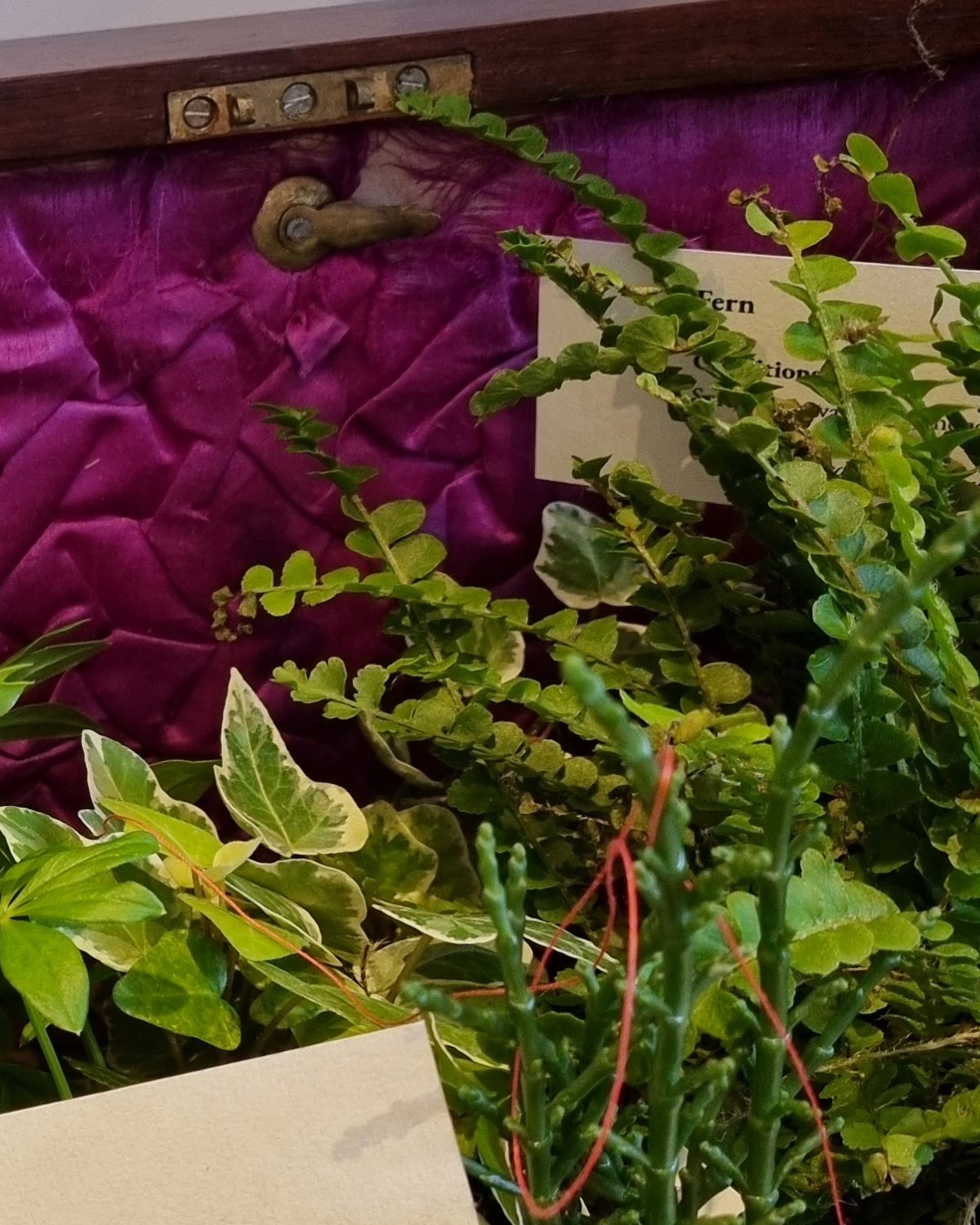
Soft, damp waterfalls, the scent of moss — my curled knowledge unfurls with regular attention.
The Victorians also held worlds in glass: the Crystal Palace, Wardian cases, rows of pinned insects. But what knowledge escaped the glass?
A ghazal for archives.
The old astronomer puts out the light
and stars shine out like pinholes in worn paper.
Creating worlds in miniature (small gods)
red wasps weave minarets of reborn paper.
It's Valentines! I buy a gilded heart
that smells of stale vanilla - lovelorn paper.
Shh…velvet drapes sweep open to reveal
faint silhouettes of castles drawn on paper.
Martha stores her loneliness in jars.
She snips and folds small creatures from torn paper.
Each shelf is stuffed with wondrous gifts but what
to get? A unicorn? A shoehorn? paper?
The archivists turn on their screens and sigh.
They miss the feel of index cards, mourn paper.
Your words are candy floss dissolved in rain.
How adeptly you court and fawn - on paper.
The crows catch currents, glide. I watch one fall –
all magic's lost, it's only airborne paper.
Sarah-Jane Crowson · first published in Mezzo Cammin

Scan the QR code beside the installation or open the participation page to find a space for dialogue. You are invited to consider how you would like to be represented as data — and what a more humane, situated data practice might look like.
Botanica remains a living work. The plants' changing responses, the material limits of the installation and participants' answers to its central question continue to produce the research rather than simply document a finished conclusion.